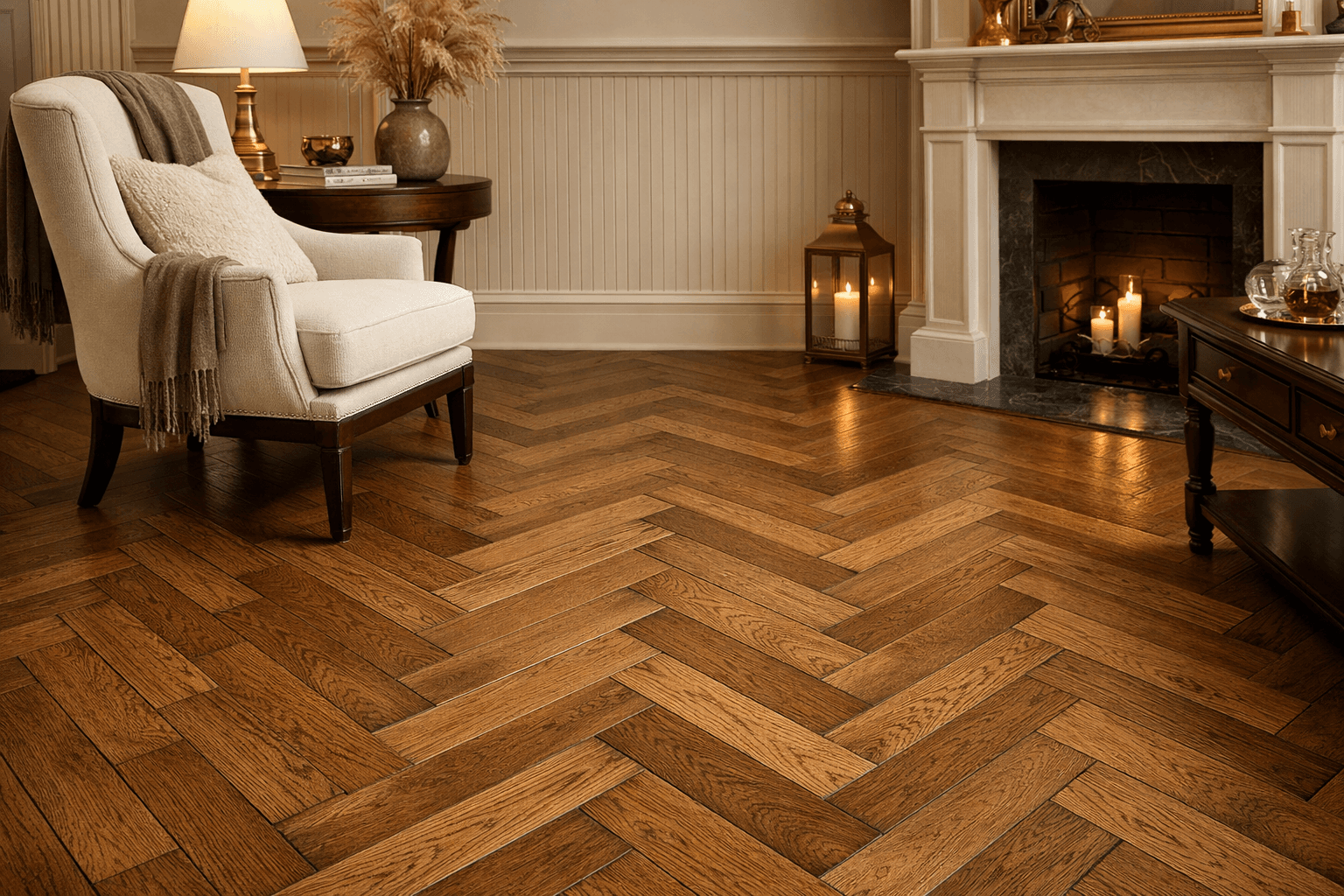
Ask about acacia flooring in most Indian showrooms and you will get a blank look. The flooring conversation in India is dominated by oak, walnut, and teak — all imported, all premium-positioned. Acacia barely gets mentioned, which is a genuine oversight because acacia has performance characteristics that suit Indian conditions exceptionally well.
What Makes Acacia Stand Out
Acacia (primarily Acacia mangium and related species, grown across Southeast Asia and Australia) is one of the hardest commercially available flooring species. Janka hardness of 2300+ lbf — nearly double that of oak, almost triple that of walnut. In practical terms: acacia shrugs off chair casters, pet claws, and footwear that would scratch oak within a year. For Indian households that do not take shoes off at the door, or for homes with large dogs, acacia's hardness is a genuine functional advantage.
It also has natural tannins and oils that give it moderate moisture resistance — not at teak's level, but significantly better than oak in conditions of occasional wet mopping or bathroom-adjacent installation.
The Grain Character: Loved and Hated
Acacia has dramatic, swirling grain with wide colour variation within a single plank — from light honey to dark chocolate-brown, sometimes in the same board. This is the most polarising aspect of the species. Designers who love it call it "alive" and "characterful." Those who prefer uniformity find it chaotic.
The Indian market reception has been mixed for exactly this reason. Acacia's character does not suit the clean, Scandinavian-influenced minimal aesthetic that dominates Bangalore and Mumbai premium apartments right now. But it works brilliantly in rustic, bohemian, or eclectic interiors — and it is essentially the only species that looks genuinely appropriate in farmhouse projects in Alibaug, Coonoor, or the Aravalli hills.
Pricing Advantage
Acacia is grown in managed Southeast Asian plantations and is not subject to the export restrictions and scarcity that affect teak and some walnut sources. This keeps pricing relatively democratic:
- Acacia engineered wood, 2mm veneer, 9-ply: ₹160–240/sqft installed
- Wide-plank acacia (180mm+): ₹200–320/sqft installed
- Distressed/hand-scraped acacia: ₹180–280/sqft installed
For the Janka hardness you get, this is exceptional value. Comparable hardness in oak would cost 30–50% more.
Best Applications in India
- Home gyms: The hardness handles dropped weights and equipment movement better than any other common species.
- Kids' rooms: Resistant to toy damage, chair dragging, general abuse.
- Farmhouses and weekend homes: The rustic character and moisture tolerance suit non-AC environments.
- Commercial spaces: Cafes, restaurants, retail — spaces that need to look good and survive heavy traffic without refinishing for 10+ years.
Acacia is less suited for: minimalist apartments where colour uniformity matters, formal drawing rooms where a more controlled aesthetic is needed, or spaces where the dramatic grain would compete with patterned textiles and artwork.
One Specification Note
Some acacia sold in India has a very thin veneer (0.6–1mm) over a cheap core — this defeats the purpose of buying a hard species because you cannot refinish it and the core will determine longevity. Specify minimum 1.5mm veneer, 9-ply core, pre-finished with hardwax oil or UV lacquer. The pre-finish is particularly important with acacia because its tannins can react unpredictably with site-applied finishes.