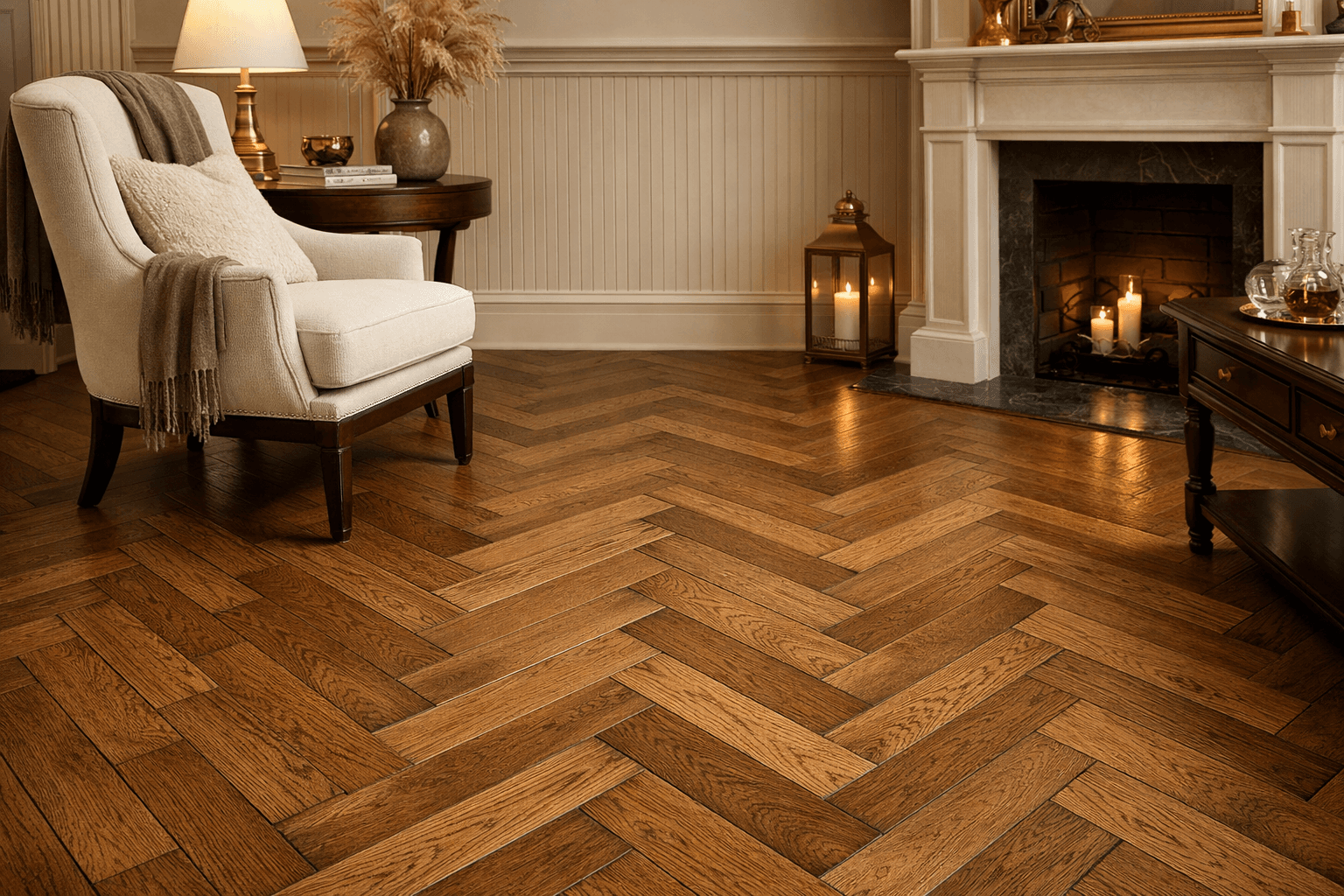
India is one of the most challenging climates for wooden flooring on Earth. Monsoon humidity that hits 90%+, coastal salt air, extreme summer heat, and termite pressure — together they destroy flooring that works perfectly in Europe or the US. Here's what you actually need to know before buying.
India's Four Climate Zones and What They Mean for Flooring
| Zone | Cities | Main Challenge | Best Choice |
|---|---|---|---|
| Hot & Humid Tropical | Mumbai, Chennai, Kochi, Kolkata, Goa | Year-round humidity 70–90%, salt air coastal | SPC/LVP or engineered wood with vapour barrier |
| Hot & Dry (Semi-arid) | Delhi, Jaipur, Ahmedabad, Jodhpur | Extreme heat summers, dry winters, monsoon spike | Engineered wood or laminate HDF core |
| Moderate / Temperate | Bangalore, Pune, Hyderabad | Mild year-round, moderate humidity | Any — best conditions for engineered wood |
| Hill Stations | Dehradun, Shimla, Mussoorie, Ooty | Cold winters, frost, damp fog, freeze-thaw | Thermopine, engineered oak, or WPC |
The Monsoon Problem
During India's monsoon (June–September), indoor humidity in many cities spikes to 80–95%. This is the primary killer of wooden floors. Here's what happens:
- Solid hardwood — swells, buckles, gaps develop. The #1 reason solid hardwood fails in India.
- Standard laminate — edges swell if water penetrates the joints; subfloor moisture causes bubbling and delamination
- Engineered wood — the cross-grain multi-ply core resists seasonal movement. Best natural wood option for monsoon zones.
- SPC/LVP — 100% waterproof core. Zero moisture movement. Best choice for high-humidity and ground-floor installations.
Termite — The Silent Floor Killer
Termites are a serious threat across most of India, particularly in Maharashtra, Karnataka, Tamil Nadu, and Uttar Pradesh. Standard wooden flooring offers no termite resistance.
- SPC and LVP: Naturally termite-proof — no wood content in the core
- Laminate: HDF core has some resistance but not immune; treat subfloor before installation
- Engineered wood: Use anti-termite underlay and pre-treated subfloor
- WPC decking and cladding: Termite-proof by composition
Always insist on a professional anti-termite treatment of the subfloor before any wooden flooring installation in India.
Coastal Homes — The Salt Air Factor
Within 5–10km of the coast (Mumbai Marine Drive, Chennai ECR, Kochi, Visakhapatnam), salt-laden air accelerates the deterioration of metal fittings, adhesives, and organic materials. For coastal homes:
- Choose SPC/LVP with stainless steel or plastic click systems — no metal parts
- For outdoor decking, use IPE hardwood (world's most salt-resistant decking timber) or co-extruded WPC with HDPE outer shell
- Avoid metal-clipped decking systems near the coast
Best Choices by Room in Indian Homes
- Living room: Engineered oak or walnut (4mm veneer+) — ideal for climate-controlled spaces
- Bedrooms: Engineered wood or 12mm AC4 laminate — low moisture, comfortable underfoot
- Kitchen: SPC/LVP — waterproof, easy to clean, handles spills
- Bathroom: SPC/LVP only — wood and laminate do not belong in wet areas
- Balcony/terrace: WPC composite decking — UV stable, waterproof, zero maintenance
- Ground floor: SPC with vapour barrier, or engineered wood with professional moisture membrane
Key Specifications to Check Before Buying
- Moisture resistance: Look for HDF core (not MDF) in laminates — denser and more water-resistant
- Wear layer: Minimum 0.3mm for SPC/LVP in residential; 0.5mm+ for commercial
- Formaldehyde: Choose E0 or E1 certified products — especially for bedrooms
- Underlay: Always use moisture barrier + acoustic underlay in India — never skip this step
- Gap management: Leave 10–12mm expansion gap around all walls — more than European specifications
Browse Luma Living's flooring range — all products are selected specifically for Indian climate performance. Request a free consultation with our experts.