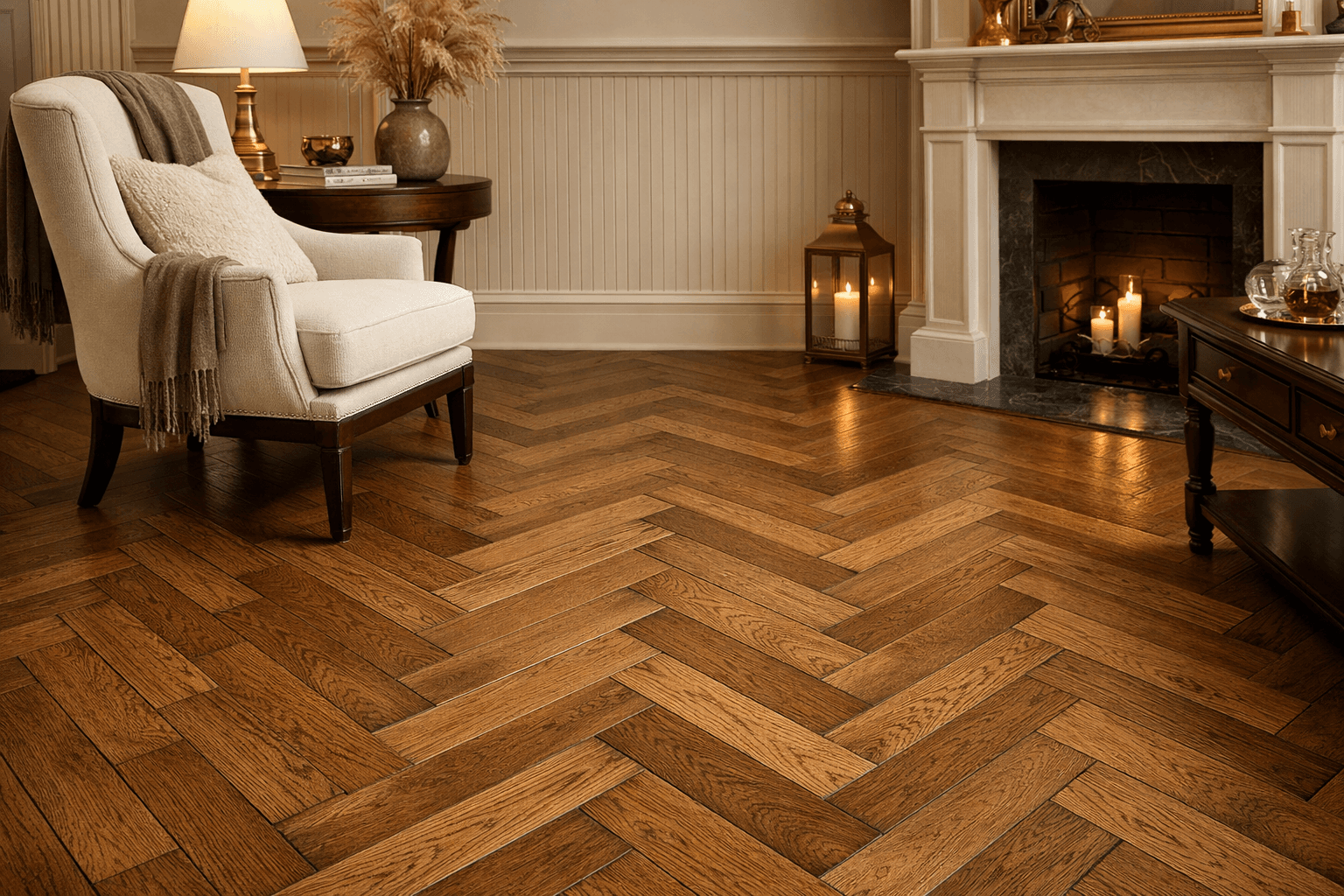
Choosing flooring in India is not the same as choosing flooring in Europe or the US. You're dealing with humidity that swings from 30% in Delhi winters to 90% during Mumbai monsoons. You have hard concrete subfloors almost everywhere. You have domestic workers, heavy furniture, and — very often — a grandmother who insists on doing yoga on the floor. Generic buying guides won't help you. This one will.
Step 1: Start With the Room, Not the Material
The single biggest mistake Indian buyers make is falling in love with a material first and then trying to fit it everywhere. Don't do that. Go room by room:
- Living room: Engineered wood or high-quality laminate (AC4+). This is your showcase room — looks matter, but it still needs to handle footwear, furniture legs, and spilled chai.
- Bedroom: Engineered wood is ideal. Quieter, warmer underfoot, forgiving of humidity fluctuations with the right core thickness (9mm+).
- Kitchen: Skip wood entirely. SPC or ceramic tile only. Kitchens in Indian homes see vegetable oil splatter, aggressive mopping, and pressure cooker steam. Even "waterproof" laminate warps here over 3–5 years.
- Bathroom: Anti-slip ceramic or porcelain. No wood product belongs here.
- Balcony / terrace: WPC decking or outdoor stone. These spaces are unconditioned — they hit 50°C in May and get drenched in July. Indoor flooring materials fail here inside one monsoon season.
Step 2: Understand Your City's Climate Zone
India has five broad flooring climate challenges:
- High humidity coastal cities (Mumbai, Chennai, Kochi): Solid wood will expand and buckle. Use engineered wood with a multi-ply eucalyptus core, minimum 9-ply. Or SPC.
- Dry north plains (Delhi, Jaipur, Lucknow): Wood contracts in winter. Expansion gaps become critical. Laminate with pre-attached underlay handles this better than glue-down.
- High humidity + moderate temp (Bangalore, Pune, Hyderabad): Actually the friendliest zone for wood. Engineered wood thrives here with basic precautions.
- High altitude (Shimla, Dehradun): Solid hardwood works here. It's one of the only Indian climates where solid wood makes real sense for interiors.
- Industrial cities with harsh summer (Nagpur, Indore): Prioritise SPC or AC5 laminate. Extreme summer heat + AC on/off cycles stress wood more than humidity does.
Step 3: Map Budget to Expectations Honestly
Here is the real price-to-performance map for India in 2026:
| Budget (per sqft installed) | What you actually get |
|---|---|
| ₹50–80 | 8mm laminate, AC3, basic finish. Fine for bedrooms. Don't use in high-traffic areas. |
| ₹90–130 | 10–12mm laminate AC4/AC5, or entry SPC. This is the sweet spot for living rooms. |
| ₹140–200 | Good engineered wood (2mm wear layer), or premium SPC. Noticeably better feel underfoot. |
| ₹200–350 | High-quality engineered hardwood — oak, walnut, teak. The look and feel is in a different league. |
| ₹350+ | Solid hardwood, exotic species, custom parquet. Only if your climate and lifestyle genuinely justify it. |
Step 4: Ask These Three Questions Before You Buy
After you've shortlisted a product, ask:
- What is the wear layer thickness? For engineered wood, anything below 1.5mm is sandable only once. For laminate, the AC rating tells you the story — AC3 is fine for light residential use; AC4 is minimum for an Indian living room with footwear traffic.
- Is there a local installer who has worked with this brand before? A ₹180/sqft floor installed wrong will fail faster than an ₹80/sqft floor installed right. The installation matters as much as the product.
- What does the warranty actually cover? Many Indian warranties exclude humidity-related damage and installer error. Read the fine print, or ask for it in writing. A reputable brand will tell you clearly what's in and what's out.
One More Thing: Get Samples Before You Commit
Flooring colours look completely different in a showroom's LED lighting versus your home's natural light at noon. Always get 2–3 samples and live with them for 48 hours in the actual room — on the floor, not in your hand. What reads as "warm walnut" in a showroom often reads as orange in afternoon sunlight. The sample test is not optional.
