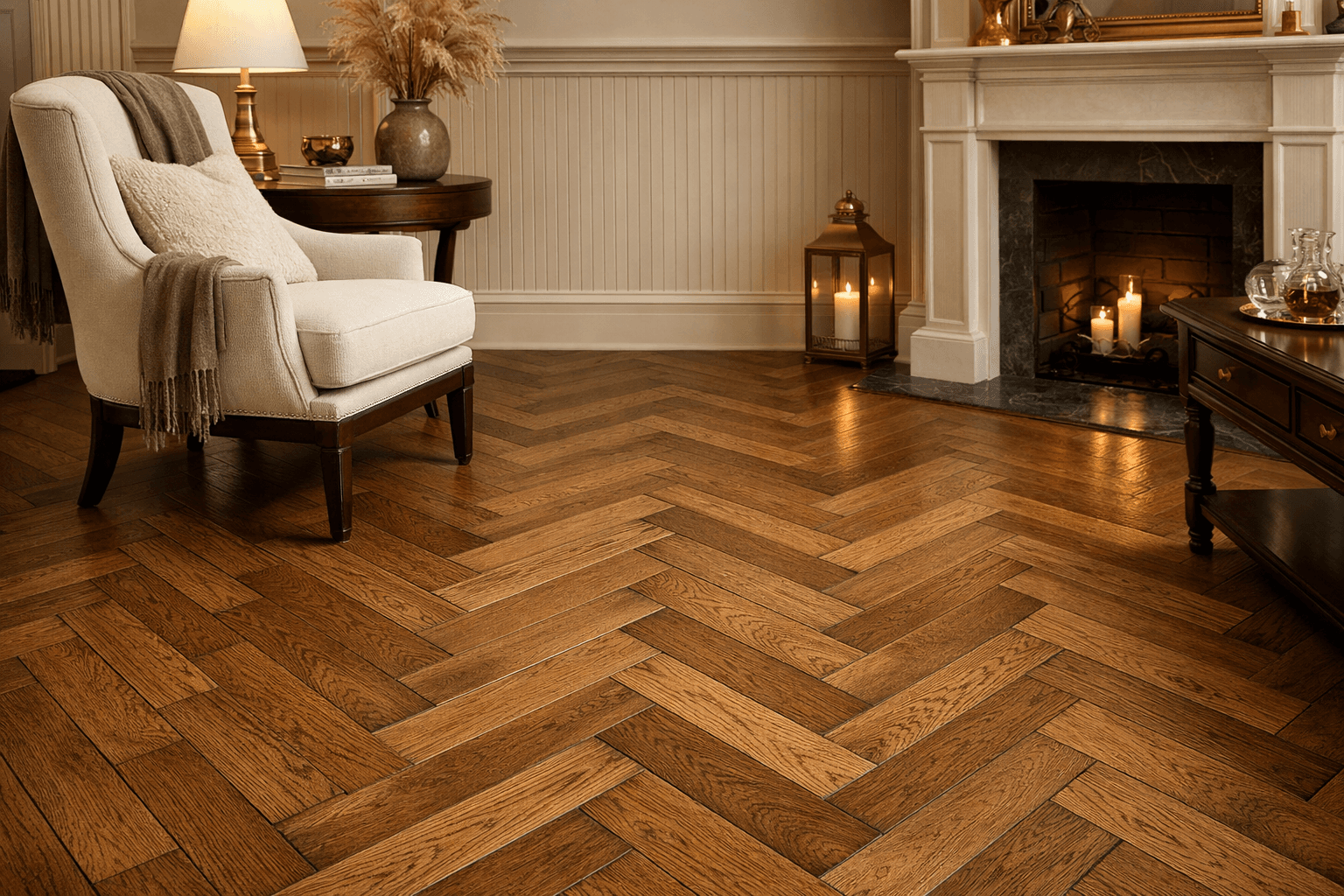
These are the two most popular "wood look" flooring options in India — and the confusion between them is real. Both look like wood. Both click-lock. But they are fundamentally different products. This guide gives you the honest comparison so you can choose right the first time.
What's the Actual Difference?
Engineered wood flooring is real wood — a top layer (2–6mm) of solid hardwood bonded onto a multi-ply or HDF core. It looks, feels, and smells like real wood because it IS real wood on the surface.
Laminate flooring is not wood — it's a high-resolution photographic image of wood printed on paper and protected by a melamine wear layer, pressed onto an HDF/MDF core. It simulates wood very convincingly at a fraction of the cost.
Side-by-Side Comparison
| Factor | Engineered Wood | Laminate |
|---|---|---|
| Material | Real hardwood veneer (2–6mm) on plywood/HDF | Photographic print on HDF/MDF core |
| Look & Feel | Authentic, warm, tactile — real wood | Very realistic but not real wood; feels slightly hollow |
| Price (material) | ₹180–₹450/sqft | ₹65–₹200/sqft |
| Price (installed) | ₹260–₹560/sqft | ₹110–₹280/sqft |
| Moisture resistance | Moderate — not for wet areas | Moderate — edges vulnerable to water |
| Durability | 20–30+ years | 10–20 years (depending on AC rating) |
| Scratch resistance | Varies by species; can be refinished | High AC4/AC5 = very scratch resistant |
| Refinishing | Yes — can be sanded and refinished | No — cannot be refinished |
| Sound underfoot | Solid, warm sound | Slightly hollow click without underlay |
| Resale value | Adds genuine value | Modest value addition |
| Eco friendliness | Uses less hardwood than solid wood | No real wood; some off-gassing from adhesives |
| Best for | Living rooms, master bedrooms, luxury homes | Bedrooms, offices, rental properties, budget renovations |
Which Holds Up Better in Indian Conditions?
India's climate is the critical factor. Here's what matters:
- Humidity and monsoon: Both are vulnerable to prolonged water exposure. Engineered wood handles humidity slightly better due to the multi-ply core's cross-grain construction. Always use a vapour barrier in ground floor or basement installations.
- Termites: Neither engineered wood nor laminate is inherently termite-proof. Pre-treat the subfloor, use anti-termite underlay, and choose products with termite-resistant treatments where available.
- Temperature swings: Engineered wood handles thermal expansion better than solid hardwood. Laminate is also stable across temperatures typical in Indian homes.
- Coastal homes: For coastal cities like Mumbai, Chennai, or Kochi — SPC/LVP is a better choice than either. If you insist on engineered wood near the coast, ensure adequate climate control.
When to Choose Engineered Wood
- You want the look, feel, and status of real wood
- You're doing a permanent home — not a rental
- Budget is ₹3–₹8+ lakh for a 2 BHK
- You want the option to refinish in 10–15 years
- The space is climate-controlled (AC and dehumidifier)
When to Choose Laminate
- Budget is tight — spending ₹1–₹3 lakh for a 2 BHK
- It's a rental property or temporary arrangement
- Children and pets mean heavy wear and frequent cleaning
- You want high scratch resistance (AC4/AC5 laminate beats most wood)
- You're comfortable replacing the floor in 10–15 years
The Verdict
If budget allows, engineered wood is the better long-term investment — especially for living rooms and master bedrooms. For bedrooms, children's rooms, and offices, a quality 12mm AC4 laminate offers excellent value and durability. The worst mistake is buying cheap 8mm laminate for high-traffic areas — it warps, chips, and disappoints within 3–5 years.
Not sure which to choose? Request free samples from Luma Living — we deliver samples to 90+ cities across India so you can see and feel the difference before committing.