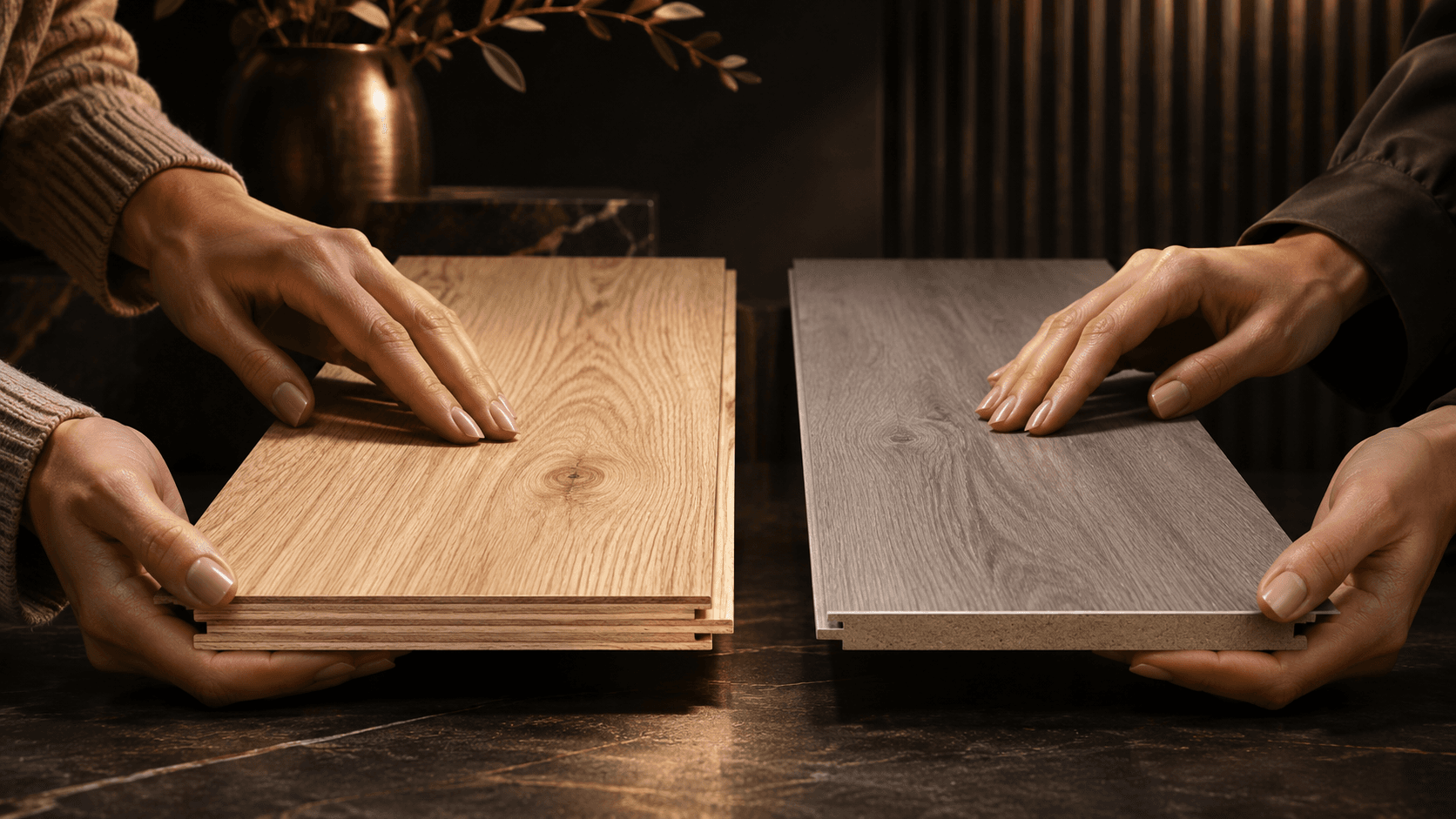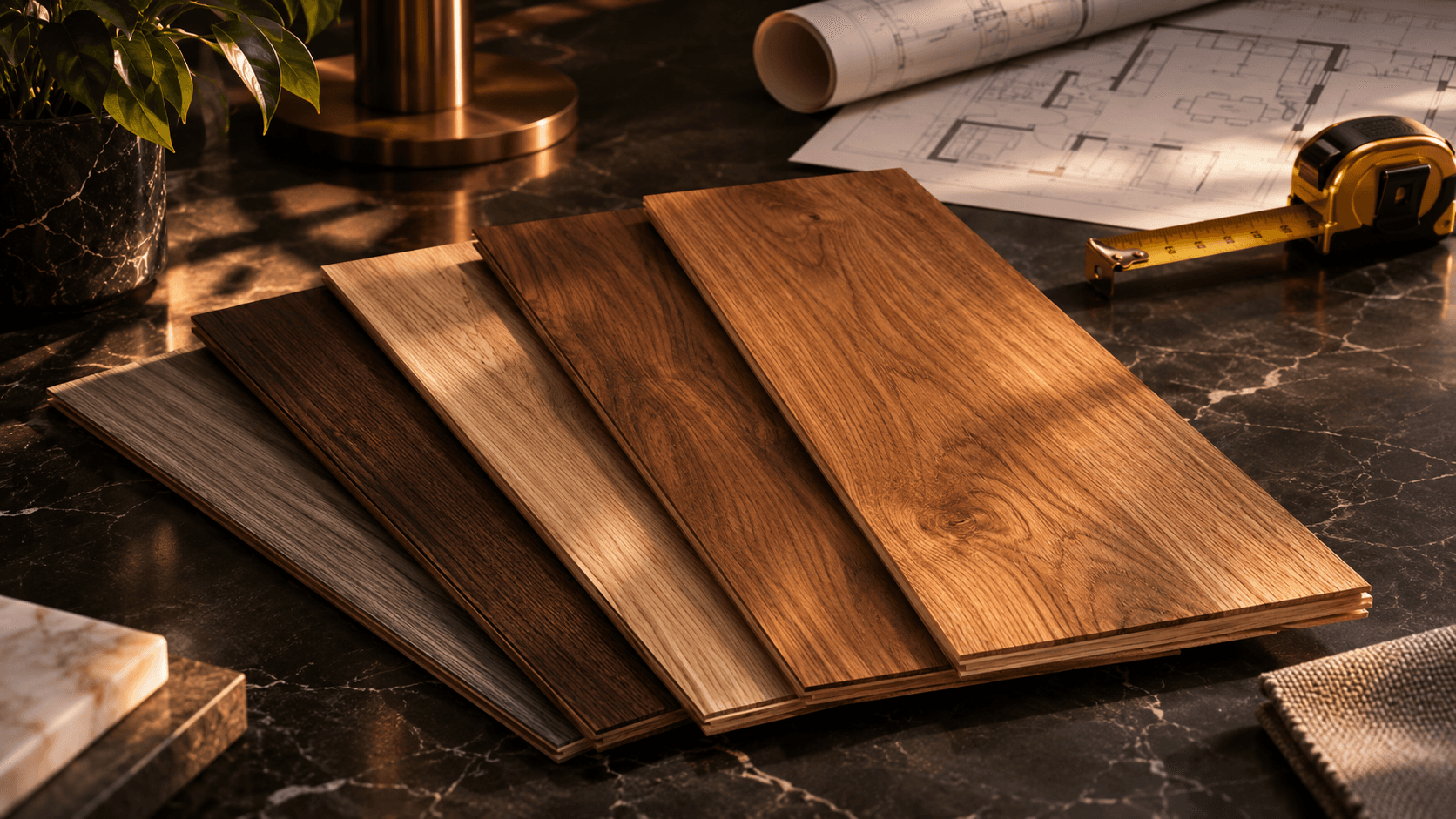
Three materials account for over 90% of exterior cladding installed in India: WPC (Wood Plastic Composite), ACP (Aluminium Composite Panel), and HPL (High Pressure Laminate). They look different, cost differently, and perform differently. Choosing wrong means either overspending or specifying a material that fails in your specific application.
WPC — Wood Look, No Maintenance
WPC is a hollow or solid board made from wood fibre (40–60%) and recycled HDPE plastic with UV stabilisers. It replicates the appearance of natural wood — grooved profiles, wood-grain texture, warm earthy tones — without wood's maintenance requirements. WPC is specifically engineered for Indian climate: UV-stable, moisture-proof, termite-proof, rated for sustained temperatures to 70°C.
Strongest at: Residential gate cladding, compound walls, home facades, verandah columns, covered outdoor areas.
Not ideal for: Ultra-flat contemporary architecture (small surface undulations are visible on close inspection), very large commercial facades above 1,000 sqft (ACP is more cost-effective at that scale).
Price: ₹95–₹220/sqft installed.
ACP — Corporate Flat Facades
ACP is two aluminium skins (0.3–0.5mm) bonded to a polyethylene or mineral fire-retardant core. The outer skin is PVDF or polyester coated — extremely flat, uniform, available in 200+ colours and metallic finishes. ACP is dimensionally very stable and can be folded on a CNC brake to form 3D facade elements, signage boxes, and canopy structures.
Strongest at: Large commercial and institutional facades, office parks, hospitals, retail frontages, signage. Projects where a flat, non-textured, contemporary appearance is specified.
Not ideal for: Residential facades where warmth or texture is desired. ACP has a distinctly corporate look that does not suit traditional or farmhouse residential architecture.
Price: ₹110–₹220/sqft installed (FR grade). Note: PE-core ACP is banned for facades on buildings above G+2 — always specify FR or mineral-core.
HPL — Premium Flat Finish, Weather Resistant
Exterior-grade HPL is a 6–8mm panel made from 70+ layers of kraft paper impregnated with phenolic resin, compressed at 70+ bar. The face layer carries the decorative print — wood grain, concrete, marble, or solid colour. Exterior HPL is significantly more impact-resistant and dimensionally stable than ACP, and unlike ACP it can be used in direct contact with wet surfaces.
Strongest at: Contemporary residential facades on premium villas, flush-panel external doors, commercial facades requiring both a premium aesthetic and impact resistance, wet areas and plinth cladding.
Not ideal for: Budget projects — HPL is 1.5–2× the cost of WPC. Large-radius curves (HPL requires kerfs or special cold-bending grades).
Price: ₹200–₹380/sqft installed (8mm exterior grade).
Decision Matrix
| Scenario | Best Choice |
|---|---|
| Residential gate + compound wall | WPC |
| Office / hospital facade >500 sqft | ACP (FR grade) |
| Premium villa exterior | HPL or Thermopine |
| Restaurant / café frontage | WPC or HPL |
| Budget boundary wall | WPC hollow profile |
| Contemporary flat-facade house | HPL |
| Coastal / humid climate home | WPC or HPL |
Luma Living stocks all three materials. Request free samples and a site visit to compare finishes in person before deciding.